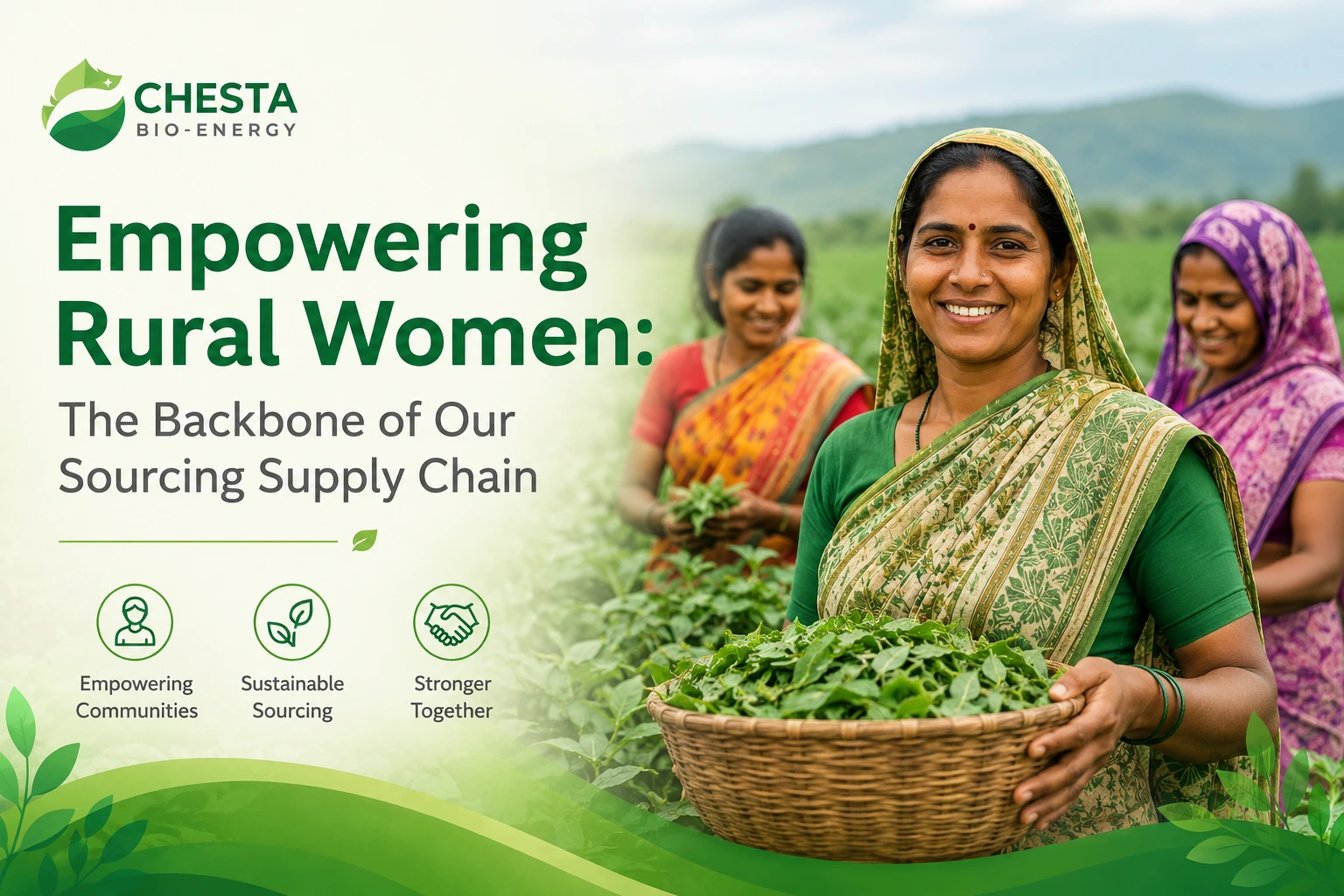
In the journey toward building a sustainable future, supply chains are often discussed in terms of logistics, procurement, technology, and efficiency. Yet, behind every successful and responsible supply chain are people whose contributions create lasting impact.
At CHESTA Bio-Energy, rural women form the foundation of our sourcing ecosystem. Their dedication, resilience, and commitment not only strengthen our operations but also create meaningful social and economic transformation within their communities.
Empowering rural women is not simply a social responsibility initiative. It is a strategic investment in sustainable growth, community development, and long-term environmental stewardship.
Why Rural Women Matter in Sustainable Supply Chains
Across rural India, women contribute significantly to agricultural activities, biomass collection, resource management, and community welfare. Their knowledge of local ecosystems, farming practices, and resource utilization makes them invaluable partners in sustainable sourcing.
When women actively participate in supply chains, organizations benefit through:
- Improved quality and consistency
- Stronger community relationships
- Better resource management
- Greater sustainability outcomes
- Increased economic resilience
Their participation creates value that extends far beyond the supply chain itself.
The Role of Women in Agricultural Communities
Rural women often perform multiple roles within their families and communities. They manage households, support farming activities, participate in harvesting, and contribute to local economies.
Their understanding of local conditions enables:
- Efficient resource collection
- Responsible agricultural practices
- Community collaboration
- Knowledge transfer across generations
These contributions make rural women essential stakeholders in the bio-energy ecosystem.
Creating Economic Independence
Economic empowerment is one of the most significant outcomes of inclusive sourcing practices.
When women gain access to stable income opportunities, they often invest in:
- Children’s education
- Family healthcare
- Better nutrition
- Household improvements
- Small businesses and entrepreneurship
Research consistently shows that income earned by women directly contributes to stronger family and community well-being.
By creating livelihood opportunities, sustainable supply chains become engines of social progress.
Building Stronger Communities
Women are often the social anchors of rural communities. Their participation strengthens cooperation, trust, and collective growth.
Empowered women frequently become:
- Community leaders
- Self-help group members
- Financial decision-makers
- Educators and mentors
- Advocates for sustainable practices
As women grow, entire communities become more resilient.
Sustainable Sourcing Through Women’s Participation
Sustainability depends on long-term thinking, resource conservation, and responsible practices.
Women involved in sourcing activities often demonstrate:
Responsible Resource Management
Careful use of natural resources helps preserve environmental balance.
Quality-Focused Processes
Attention to detail improves material quality and consistency.
Community Accountability
Local participation creates transparency and trust.
Long-Term Stewardship
Women frequently prioritize future generations when making decisions about resources.
These qualities support a more sustainable and resilient supply chain.
Conclusion
Rural women are not merely participants in the supply chain. They are leaders, caregivers, innovators, and custodians of sustainable development.
Their contributions strengthen communities, improve livelihoods, and build more resilient sourcing ecosystems.
At CHESTA Bio-Energy, we proudly recognize rural women as the backbone of our sourcing supply chain. By investing in their empowerment, we invest in a future that is sustainable, inclusive, and prosperous for all.